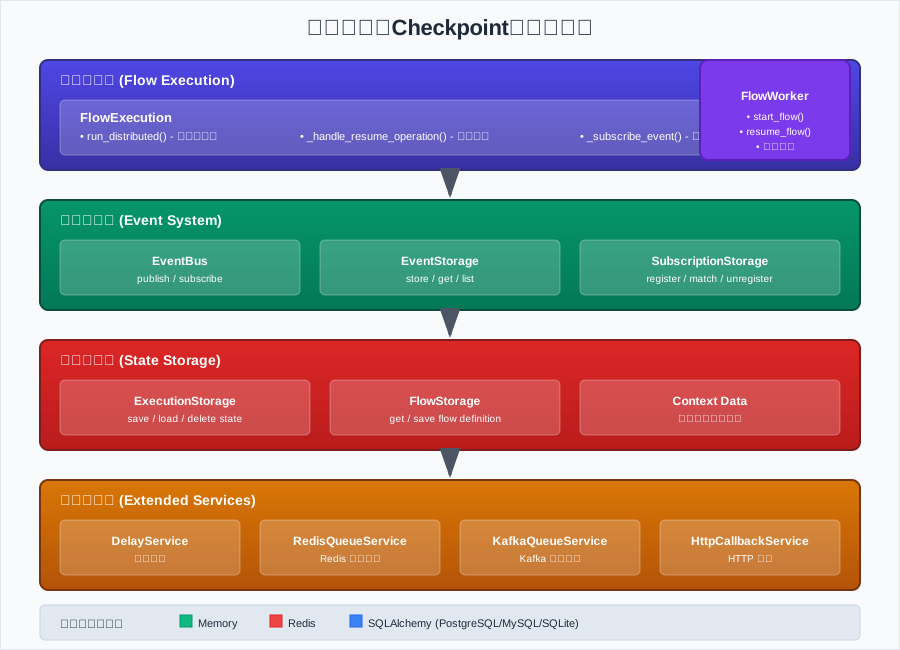
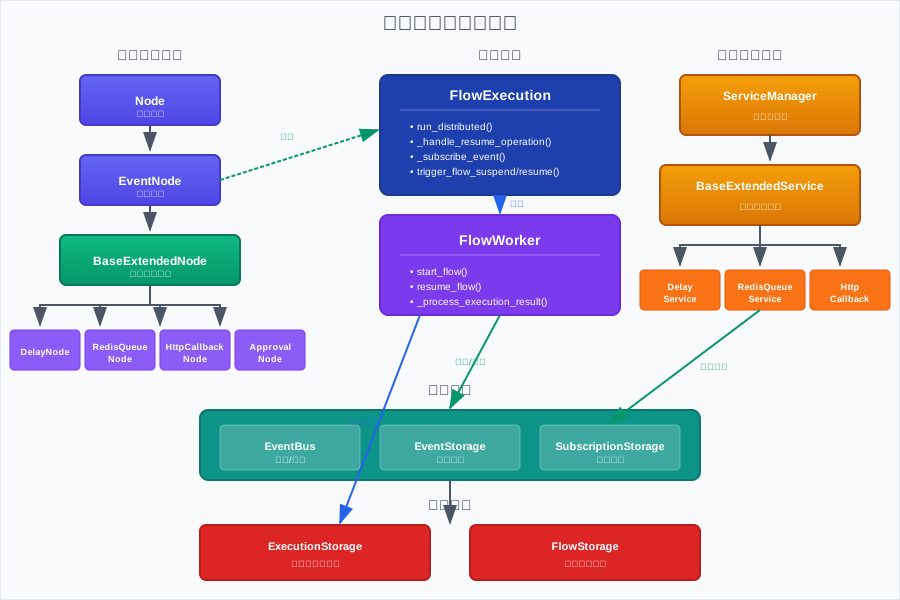
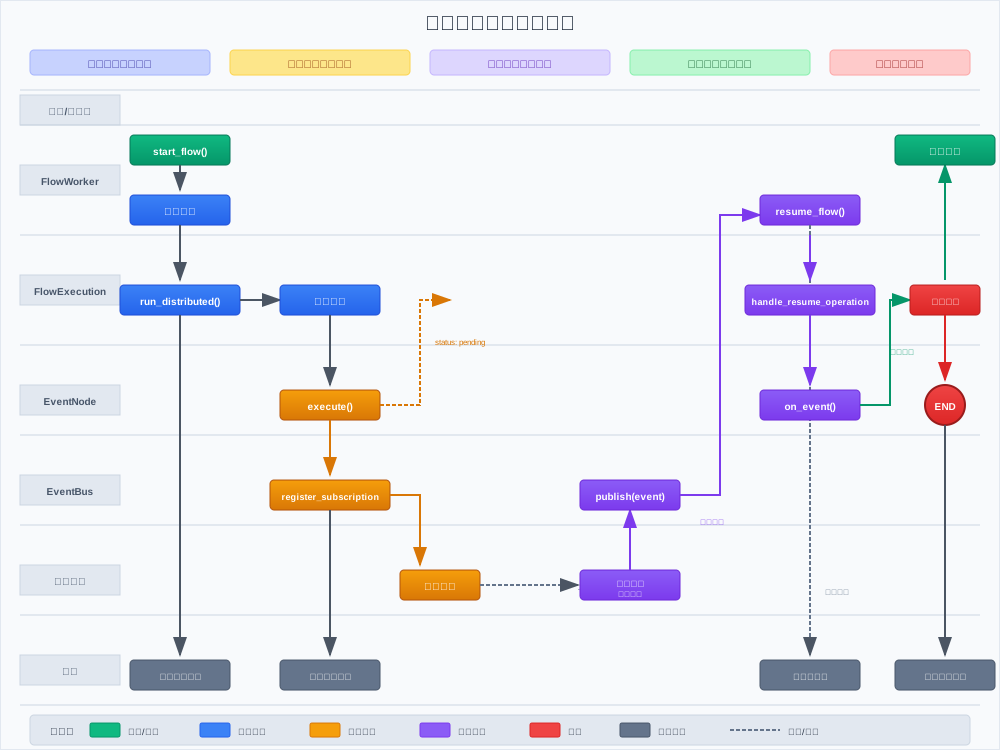
时序图
本页用图示展示 plaita 三种执行模式的交互时序,以及断点续执的挂起/恢复流程。SVG 取自 docs/zh/images,与代码实现保持一致。
Normal 模式
同步阻塞,调用方一次拿到完整结果。
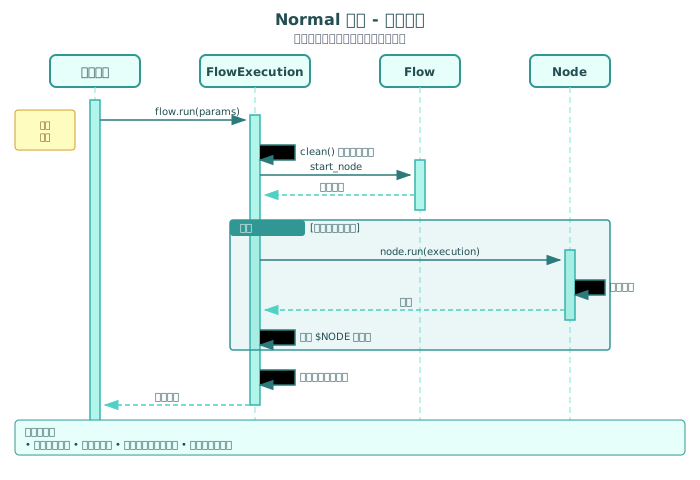
要点:
flow.run()→FlowExecution.run_compatible(lazy=False)→ 同步桥接驱动异步策略clean→on_flow_start→setup_flow→NormalStrategy.execute循环跑节点- 每节点:
on_node_start→NodeRunner.run_node(超时/重试/错误策略)→ 写$NODE[id]/$LAST_NODE→on_node_end - 到达
End→on_flow_end(result)→ 返回
Generator 模式
异步生成器,每节点 yield 一次,调用方控制节奏。
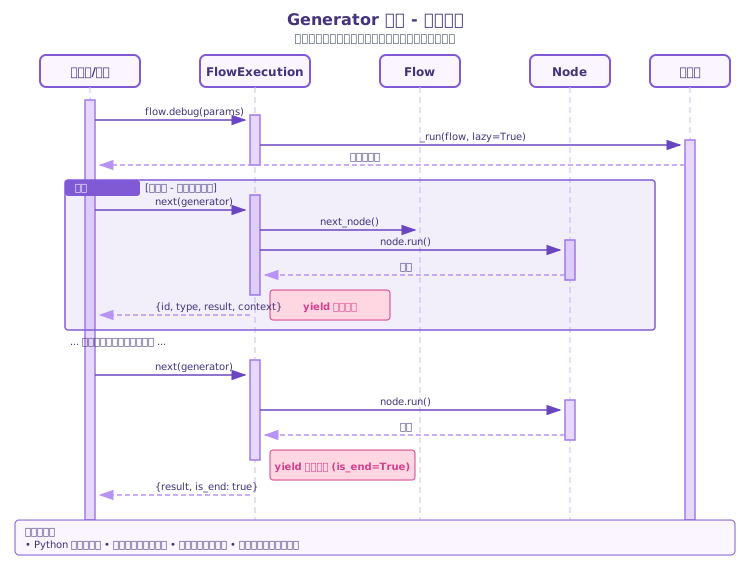
要点:
flow.debug()→run_compatible(lazy=True)→ 返回同步生成器- 每节点 yield
{id, type, result, branch, context, is_end} on_flow_end推迟到生成器消费完毕/关闭时触发
Distributed 模式
每次调用推进一个节点,事件节点处挂起,外部事件到达后恢复。
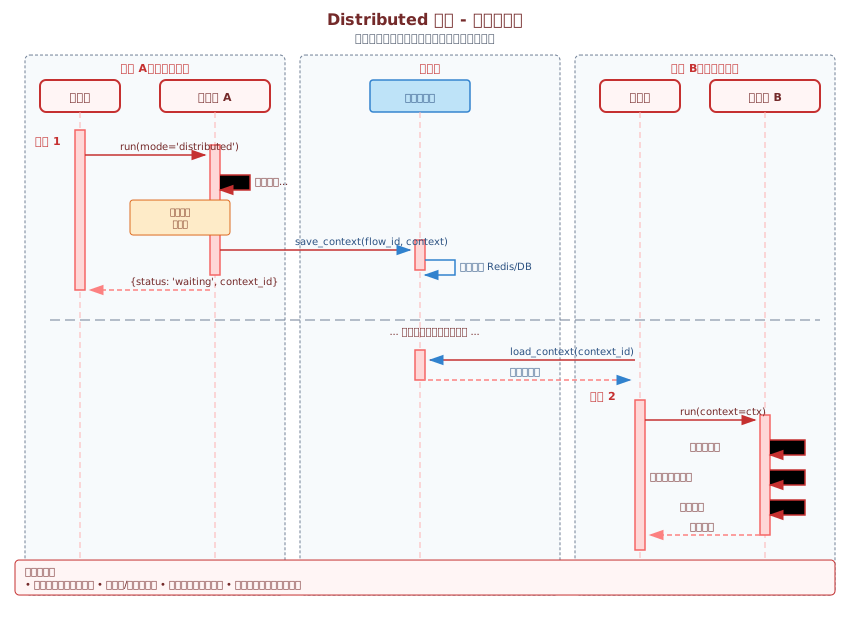
要点:
- 首次:
clean→on_flow_start→setup_flow→ 跑到第一个EventNode EventNode订阅 event bus →on_node_suspend/on_flow_suspend→ 返回is_suspend=True与context- 调用方持久化
context(存入ExecutionStorage) - 恢复:
run_distributed(saved_context=..., resume_type="event", resume_data=...)→on_flow_resume/on_node_resume→node.on_event(...)→ 续跑后续节点
执行总览
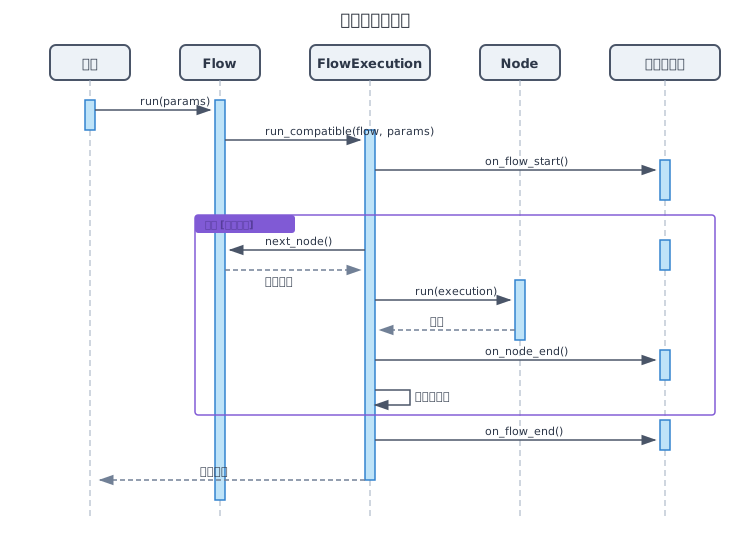
断点续执组件关系
更多断点续执的架构图(整体架构、组件关系、执行流程)见 断点续执 章节,包括: